You are here
DJ Luane on starting over, women in electronic music, and rebuilding an international career

From Curitiba to China, from the Philippines to clubs and festivals across 24 countries, DJ Luane reflects on identity, resilience, the changing role of women in electronic music, and the chapter she is building now
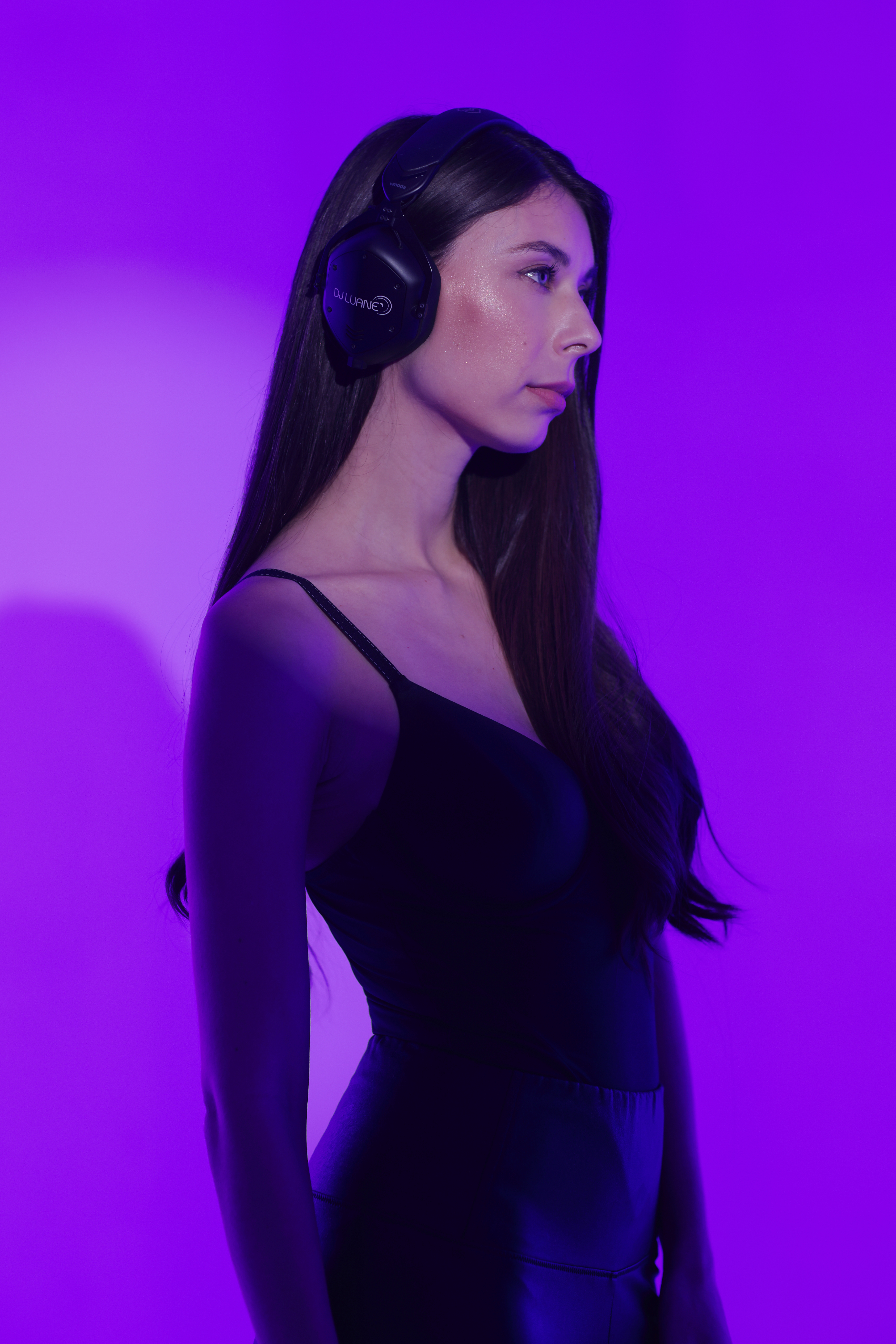
DJ Luane’s career has unfolded across continents, shaped by movement, reinvention, and persistence. Before music, she was working internationally in fashion, but the search for a deeper creative outlet eventually led her toward DJing and, later, music production.
What followed was a fast and intense rise. Within months of learning the craft, she was already performing. Within a year, she was touring across Asia. Since then, her story has included international growth, the challenge of building credibility as a woman in electronic music, the shock of the pandemic, and the difficult process of starting again after everything came to a halt.
DJane Mag spoke with DJ Luane about identity, resilience, the changing role of women in the scene, and the chapter she is building now.
You left Curitiba at a very young age and moved to China to build an international career. How did that experience shape your worldview and later your artistic identity?
It was a cultural shock, a whole new world. When you go through something like that, you also start becoming a new person.
After several years in fashion, was there a specific moment when you realized you needed a different kind of creative expression?
I did not see any real creative expression in being a model. It felt like you were constantly being judged by your body and your face, whether you were skinny enough. As a DJ, you need real skills, and the recognition feels much more rewarding.
How did DJing enter your life, and what made you realize it could become more than a passing discovery?
I was already looking for something else when a friend told me I should try DJing, which was still not very common for women at the time. I got into it soon after, and I never stopped.
You learned to DJ in the Philippines and were already performing within a few months. What was it like to go through such an intense learning curve at the very beginning?
When you really love something, the learning curve does not feel heavy. It feels exciting. I was so obsessed with learning that every single day I was trying, experimenting, and pushing myself to improve.
Read this next: Giorgia Angiuli Opens Up About WE HEAL, "We Rave We Heal" and Reimagining the Dancefloor as a Space for Transformation
When you started, female DJs were still far less visible than they are today. What do you remember about that landscape?
When I started, there were definitely far fewer female DJs on stage compared to today. It felt like a space dominated mostly by men, so you had to prove yourself through consistency rather than expectation.
Did you ever feel you had to prove yourself more than men in order to be taken seriously in the scene?
Yes, in some situations I definitely felt I had to prove myself more to be taken seriously. In the beginning, people do not always look at your skills first. They look at assumptions. I learned very quickly that the only way through that was consistency and strong performances every time I stepped on stage.
What were the main challenges you faced as a woman in an industry that has historically been dominated by men?
At the beginning, the biggest challenge was being taken seriously from the start. In a male dominated industry, people sometimes underestimate you before they even hear you play, so you have to prove your skills through consistency and performance.
Another challenge was access and opportunity. Sometimes you have to work harder to get the same chances or to be placed on certain lineups. But that also pushed me to be more disciplined and more focused on improving my craft every day.
Do you think women in electronic music have often been judged by standards that go beyond the music itself? How has that affected the way careers are built?
Yes, I think that has definitely happened. Women in electronic music are sometimes judged on things that go beyond the music, like how they look, how they present themselves, or even assumptions about how they got their opportunities. That takes attention away from the actual craft.
Today, women are far more visible across lineups, studios, and the wider industry. From your perspective, what has genuinely changed?
There are now more platforms, communities, and support systems helping women enter and grow in the scene, which was not as accessible before. Social media has played a big role in that too, because it gives artists a direct way to be seen without waiting for traditional gatekeepers.
Do you see the rise of women in the scene as a real structural shift, or is there still a gap between visibility and equal opportunity?
There is still a gap between visibility and equal opportunity. Being seen does not always mean being booked, paid, or supported at the same level. In some cases, representation has improved faster than the actual industry structure behind it.
At what point did you feel the need to move beyond the booth and start expressing your vision through original music?
When you spend so much time behind the booth, you start forming your own identity in music, what you like, how you build energy, and what emotions you want to create. At some point, I felt the natural next step was to translate that into original music so I could fully express my vision, not just perform it.
Your first single, Find Myself, marked the beginning of your path as a producer. What did that release represent for you at the time?
It was the first time I felt like I was stepping out of being just a DJ and starting to define my own sound as an artist.
Listen to Find Myself below.
Your career was growing internationally before the sudden interruption caused by the pandemic. How did you experience that rupture, both personally and professionally?
It was heartbreaking. I thought my career was over. But after that, I also had so much fuel to do better and improve.
You have said that at one point you thought your career might be over. What was the hardest part of that period emotionally?
Feeling lost, like not knowing what I would do after all of that. I would wake up feeling sad on many days.
Starting again after such a long pause takes emotional strength as well as professional rebuilding. What sustained you during that return?
Coming back after a pause can feel like starting from zero again, so I focused on small steps instead of the bigger picture. I kept working on my sound, staying in the studio, and rebuilding my confidence through consistency rather than pressure.
But honestly, what carried me the most was remembering why I started in the first place. That feeling never really goes away. It becomes your anchor when everything else feels uncertain.
“Coming back after a pause can feel like starting from zero again.”
When Pop the Champagne began to gain traction and reached number one in Mexico, did it feel like a comeback or the start of a completely new chapter?
I was feeling like I would not make it again, like I had failed. Then when that track came out, I realized I could do it again and also focus more on tech bass house.
Listen to Pop the Champagne below.
Your music has continued to receive international support, from radio play to chart recognition. What do you think makes your sound connect across different countries and audiences?
I think it is because it feels very universal. You do not always need language for music to work. I also try to keep a balance between familiarity and my own identity.
You have now performed in 24 countries. What have those global experiences taught you about yourself as an artist and as a person?
As an artist, they made me more adaptable. Every crowd is different, every culture has its own pace and energy, so you learn how to read a room quickly and stay present instead of relying on a fixed formula.
With dates confirmed at venues and events such as Ministry of Sound, Club E1, and Songkran Festival, what does this new chapter represent in your journey?
More than anything, it represents progression, not just in where I am playing, but in who I am becoming as an artist.
Your upcoming release, Peligrosa, feels like another step in your evolution. What does this track reveal about where you are creatively right now?
It is bass house, and it hits hard in the club.
Looking at your journey as a whole, what makes you most proud today?
Looking back, it is not just about the stages I have played or the countries I have performed in. It is about the process of building everything from the ground up. Learning, failing, improving, and still continuing.
For young women who dream of building an international career in electronic music, what advice would you give from your own experience?
Be patient with the process. International careers do not happen overnight. They are built step by step through persistence, resilience, and a lot of small moments that add up over time.
Closing
What stands out most in DJ Luane’s story is not a simple idea of success, but the ability to keep rebuilding. Her path moves through different countries, different industries, and very different chapters of life, yet the thread that connects everything is consistency.
In a scene where visibility does not always translate into equal opportunity, she speaks openly about what it takes to stay present, improve, and keep going. From discovering DJing in the Philippines to returning after the pandemic with tracks like Pop the Champagne and now moving into a new phase with Peligrosa, her story is one of adaptation, discipline, and creative survival.
Connect with Luane
Follow DJ Luane on Instagram, Facebook, YouTube, Spotify, and SoundCloud.