You are here
Giorgia Angiuli Opens Up About WE HEAL, "We Rave We Heal" and Reimagining the Dancefloor as a Space for Transformation

In conversation with DJane Mag, Giorgia Angiuli opens up about the vision behind her new label WE HEAL, the personal journey that shaped "We Rave We Heal," and why she believes the dancefloor can become a space for release, presence and transformation
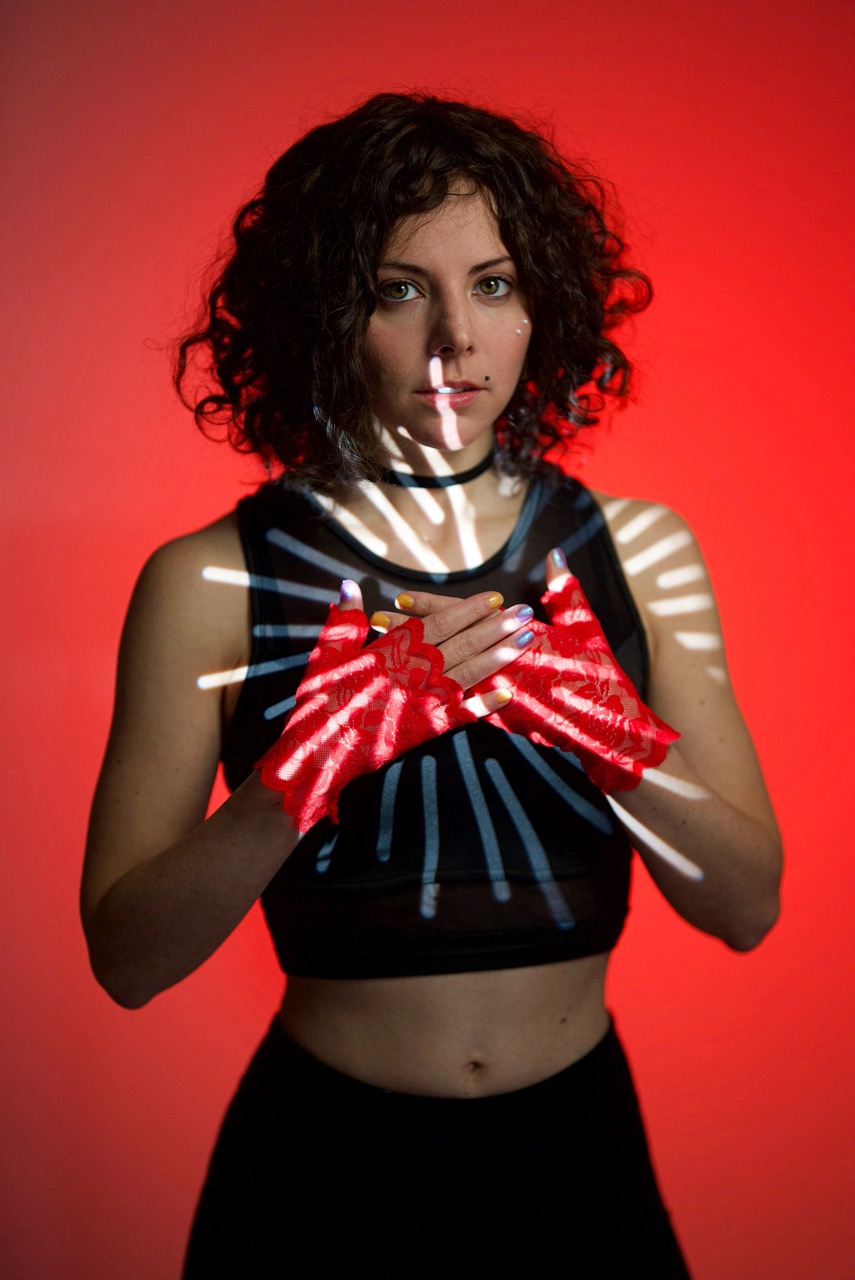
For Giorgia Angiuli, this new chapter arrives with both clarity and weight.
The Italian live artist, electronic producer and classically trained musician has spent years building an international reputation through emotionally charged performances, a distinctive sonic identity and a body of work that has moved fluidly between club intensity and melodic depth. But with the launch of her new label WE HEAL and the release of "We Rave We Heal", Angiuli is stepping into a phase that feels more personal, more intentional and more fully aligned with who she is today.
This is not simply a rebrand or a new release cycle. It is the result of a deeper inner shift.
At the centre of this new era is a belief that has become foundational to her work: electronic music can do more than move people. It can reconnect them with their bodies, help them process emotion and create a sense of collective release that goes beyond the usual language of nightlife.
"'We Rave We Heal' really represents a new chapter for me. The title itself is my inner manifesto. I truly believe in dance music as a powerful healing tool, especially when you approach it consciously and allow yourself to fully connect with the moment."
That perspective now shapes not only the music she is making, but the larger vision around it. For Angiuli, the dancefloor is no longer just a setting for escapism or intensity. It is a place where people can feel present, open and emotionally connected through movement.
"For me, the dancefloor is not just a place to escape, but a space where you can release emotions, transform energy, and reconnect with your inner self."
A Turning Point
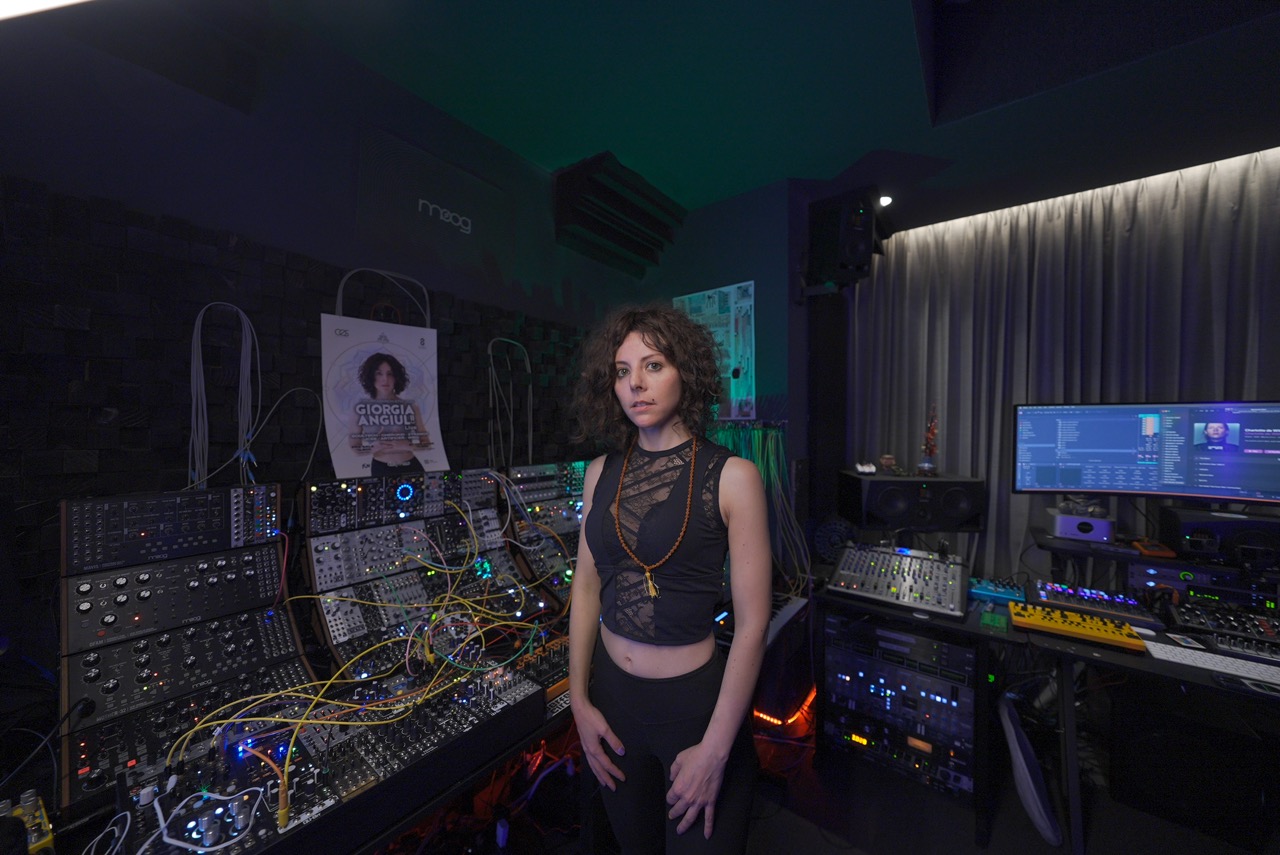
It is a vision rooted in lived experience. After dealing with anxiety during her career, Angiuli found herself rethinking not only performance, but also the pace, pressure and emotional cost of life as an artist. That process led her into a deeper exploration of spirituality, self-awareness and sound healing — not as abstract ideas, but as part of a search for alignment between health, purpose and creativity.
"Experiencing anxiety during my career really changed the way I relate to music, both on and off the stage. It made me slow down and listen more deeply, not just to sound, but to myself."
That turning point fundamentally changed the way she understood sound. Rather than treating music as something purely aesthetic or functional, she began to approach it as vibration — as something that could shape emotional and physical states with far greater intention.
"I started to see sound less as something purely aesthetic and more as something vibrational — something that can influence your emotional and physical state."
This shift also reconnected her to a much older understanding of what music is for. "We shouldn't forget that music has been humanity's first medicine," she says. "Since ancient times, people have used rhythm, song, and sound to heal, to connect, and to create community — from tribal ceremonies to sacred chants — long before science gave us explanations."
Building WE HEAL
This is where WE HEAL becomes more than a label name. It acts as the clearest expression yet of Angiuli's current philosophy — one that connects club culture, embodiment, emotional awareness and community. Rather than building a platform around image or trend, she is trying to create a space with genuine purpose behind it.
"WE HEAL was born from this calling. It's not just a label, but a platform to share awareness, to bring intention into music, and to create something meaningful together with a community."
The path to that clarity was not straightforward. After years of navigating low self-esteem and external expectations, she made a decision that many artists struggle to reach: to stop trying to please everyone and start creating from a place she actually recognises as her own. "I understood that I can't please everyone, and that trying to do so only takes you further away from your true path."
Intensity, Softness and the Dialogue Between Them
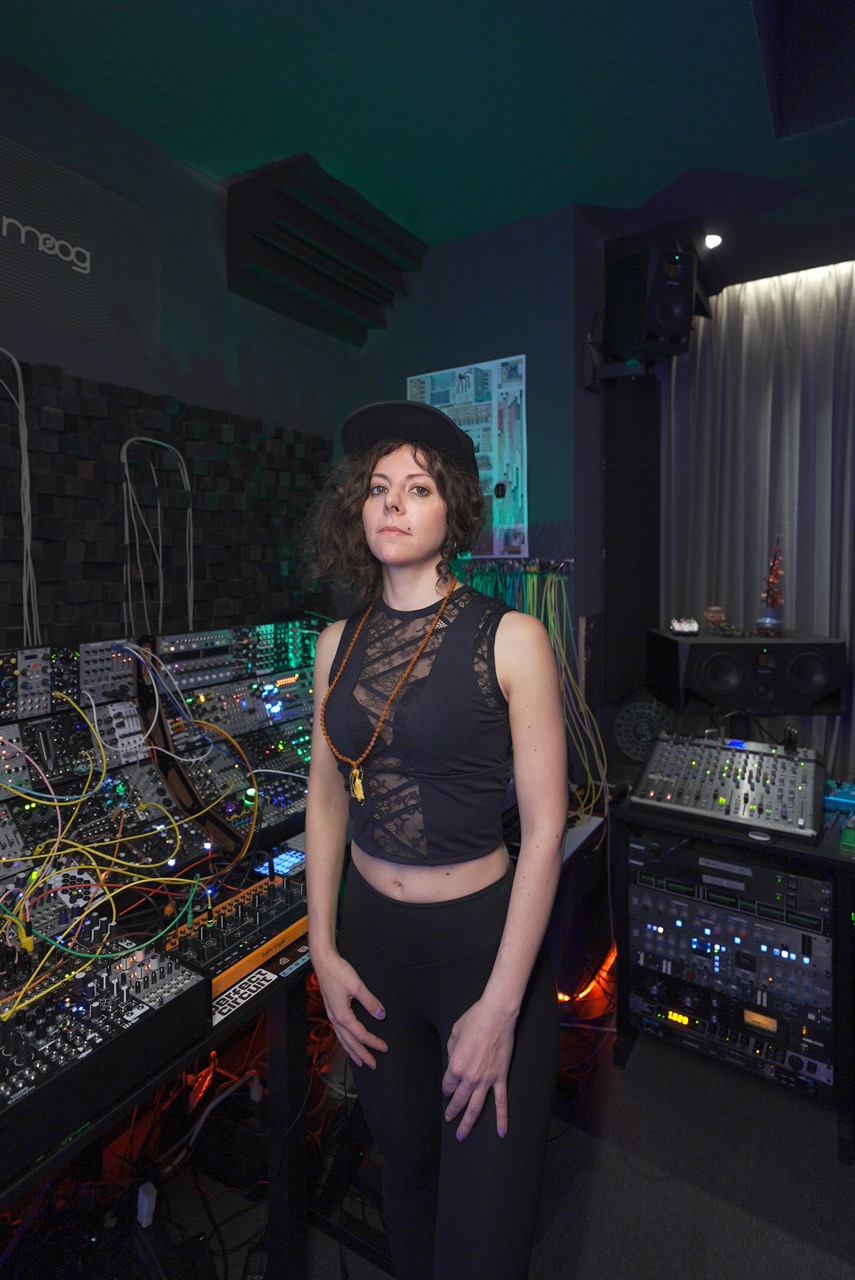
That intention also gives "We Rave We Heal" its emotional tension. The track still draws from the techno energy that has long been central to Angiuli's sound, but it opens a broader emotional and spiritual direction. There is hypnosis and momentum, but there is also greater space for vulnerability, softness and introspection.
"Sometimes you need intensity to break through, sometimes you need softness to integrate. Today, my sound is really about this dialogue between strength and vulnerability, between movement and stillness."
That balance feels central to what makes this new phase compelling. Angiuli is not rejecting rave culture. She is not distancing herself from the physical force of electronic music. Instead, she is asking what that force can become when approached with more awareness and care.
One of the most striking examples is her continued relationship with the 303 — an instrument long associated with acid energy and raw club functionality. In her work, it becomes something more layered. Angiuli has even begun experimenting with the 303 in sound meditation contexts, exploring how its fluid and hypnotic qualities can create altered, body-led states.
"There's something very primal about that sound. It cuts through the mind and connects directly to the body, which is exactly what I'm interested in exploring."
What the Dancefloor Can Hold

That direct connection to the body is essential to how she views the dancefloor today. And she is alert to something specific happening in club culture right now — something that goes beyond the usual conversation about excess or hedonism.
"In recent years, we've often gone to dance spaces but stayed stuck in our minds — scrolling our phones, taking pictures — rather than connecting with our bodies," she observes. "The real power of the dancefloor is in moving your body, feeling the music, and staying connected to the moment."
Her reading of the dancefloor avoids easy cliché. She does not romanticise it as a fantasy zone, nor reduce it to hedonism. Instead, she frames it as one of the few remaining collective environments where vulnerability, joy and release can coexist fully.
"Being on the dancefloor can be a profoundly vulnerable experience, and that's what makes it so powerful. You can cry during a drop, smile at a stranger, or simply let your emotions flow freely and feel completely safe doing it."
"I do feel the electronic scene is ready for this conversation. It's not about rejecting what club culture has been, but evolving it — making it richer, deeper, and more inclusive of the whole human experience."
Life, Not a Trend
As themes of wellness and healing become more visible across electronic music, Angiuli is also aware of how quickly these ideas can be flattened into aesthetics. For her, the only way to protect their meaning is to remain anchored in real experience.
"For me, this comes from real life experience, not from trends or aesthetics. It's life, not a trend. And when people feel that authenticity, it creates a real connection that goes beyond aesthetics or what's fashionable in the scene."
That may be what gives this moment its real depth. WE HEAL does not feel like a concept placed on top of a campaign. It feels like something that has taken time to become clear — and is now being expressed directly.
Sensitivity as a Superpower
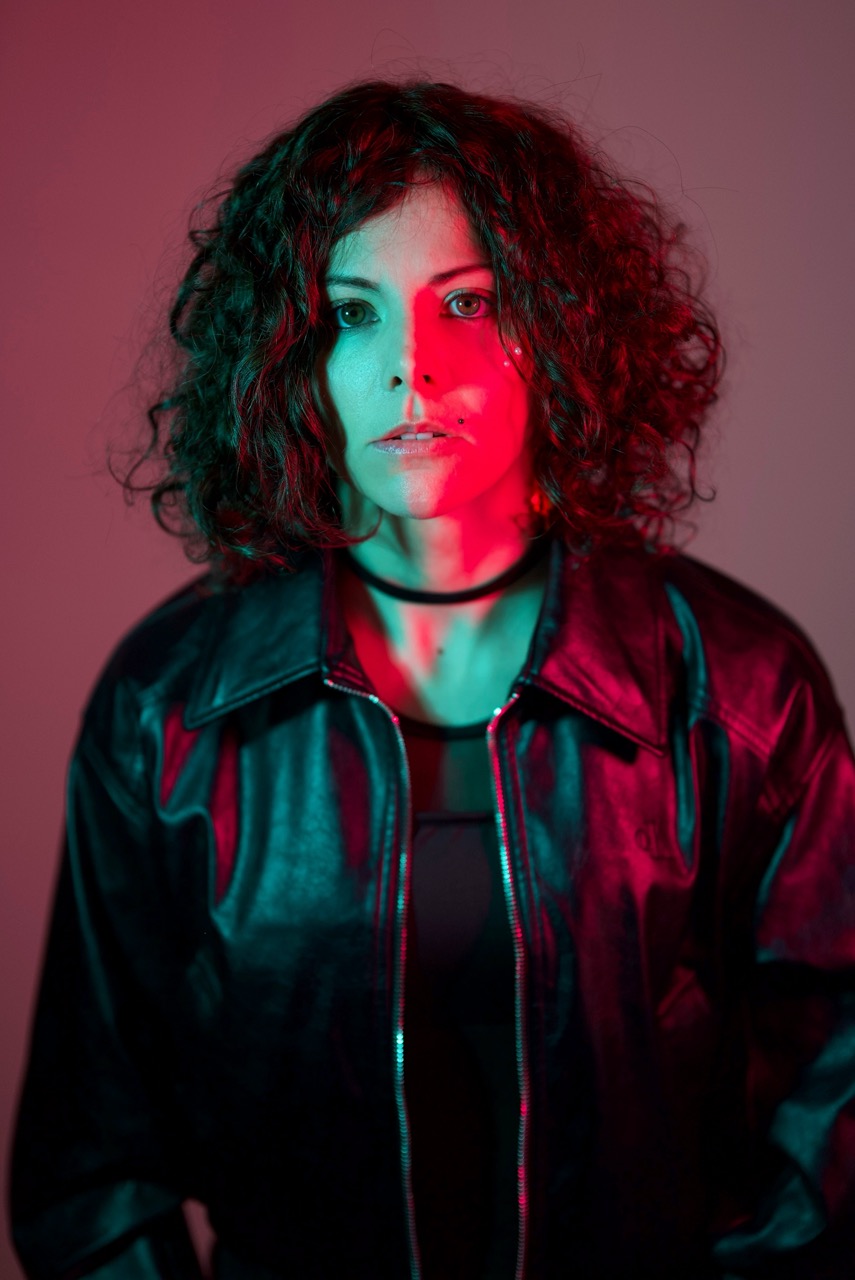
As a woman entering this phase with greater freedom and emotional clarity, Angiuli speaks about sensitivity not as something to overcome, but as one of her greatest creative strengths. She references Rumi — "The wound is the place where the light enters you" — not as borrowed wisdom, but as something she has lived into: the anxiety, the self-doubt and the pressure have not been left behind. They have become the source.
"I learned that being sensitive is actually a superpower. It's not weakness. It allows me to connect deeply with myself and with others, to feel and transmit emotion through my music."
With "We Rave We Heal" and WE HEAL, Giorgia Angiuli is not simply introducing a new track or a new platform. She is putting forward a wider proposition about what electronic music can hold: intensity and softness, physical release and inner awareness, club energy and emotional truth.
In her world, the dancefloor is no longer just somewhere to disappear.
It becomes somewhere to return to yourself.
"We Rave We Heal" is out now on WE HEAL.
Giorgia Angiuli: @giorgia_angiuli
Follow WE HEAL: @weheal.label